Himachal will develop five model EV cities– Shimla, Hamirpur, Mandi, Baddi, and Dharamshala as benchmark cities for EV readiness, infrastructure, and adoption, showcasing — replicable models for the State.
Key E-mobility Initiatives in Himachal Pradesh
Government Fleet
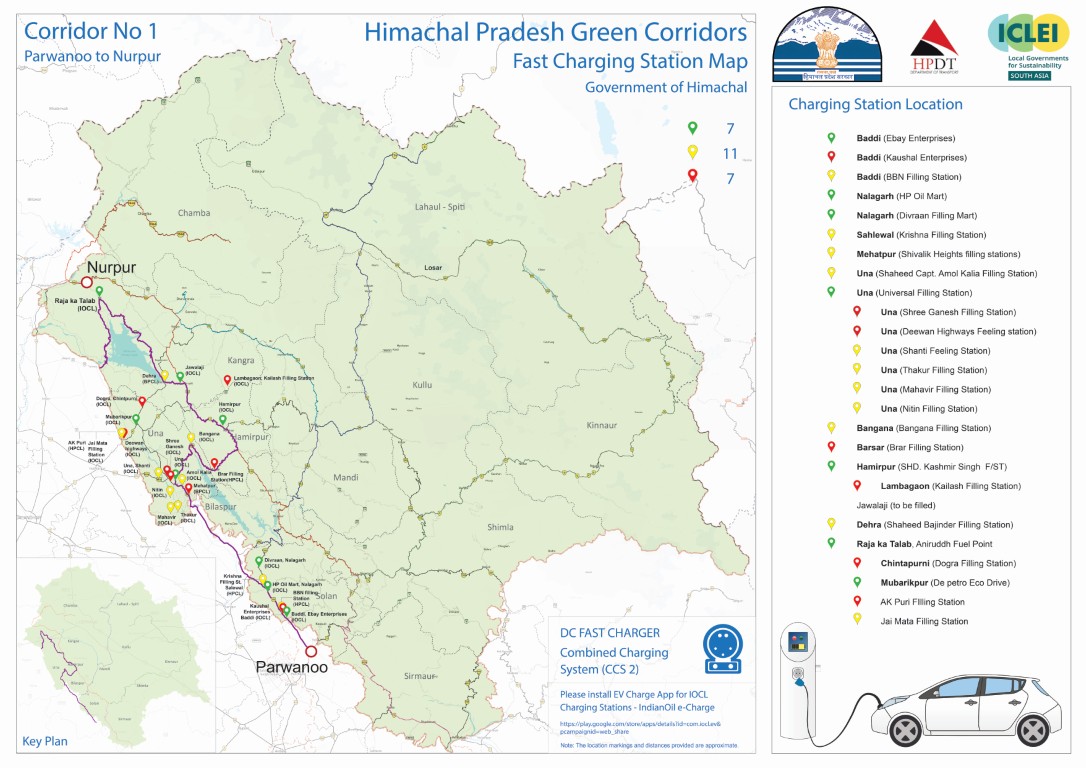
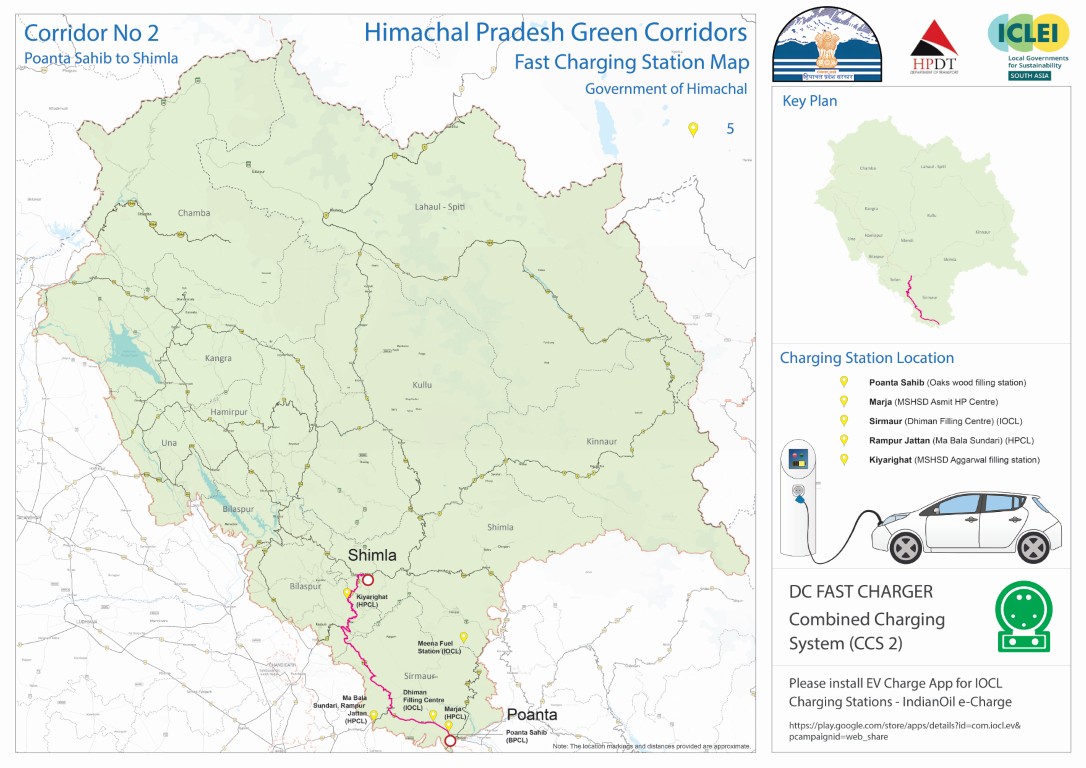
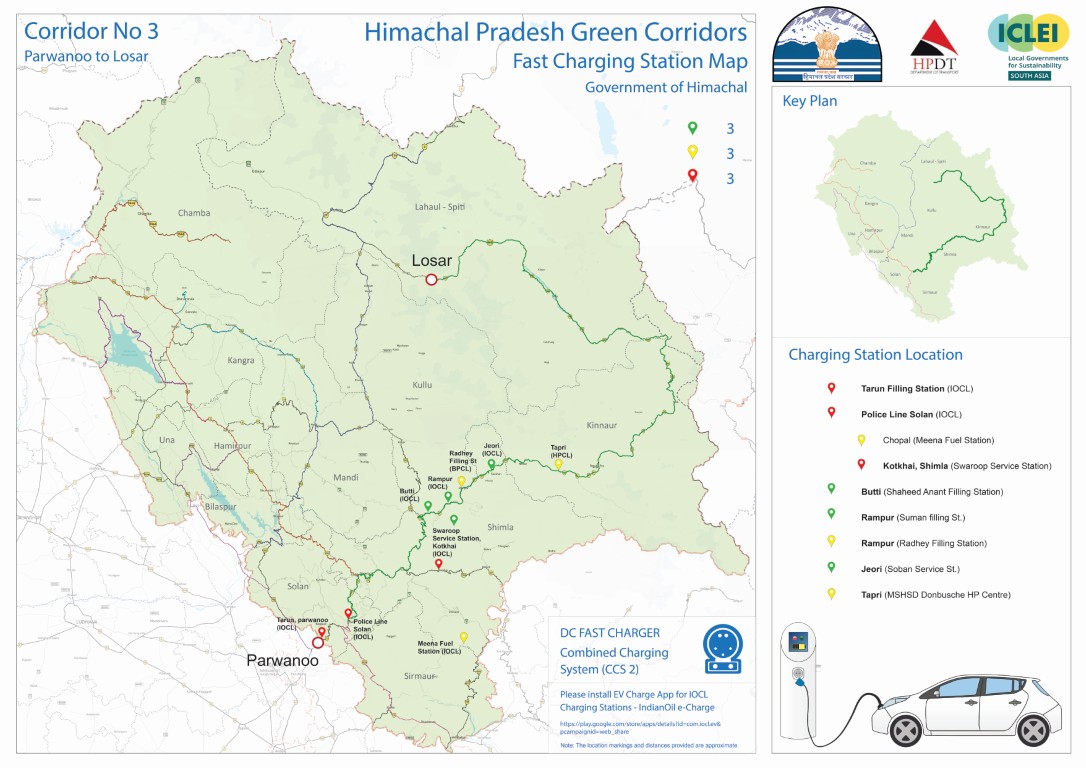
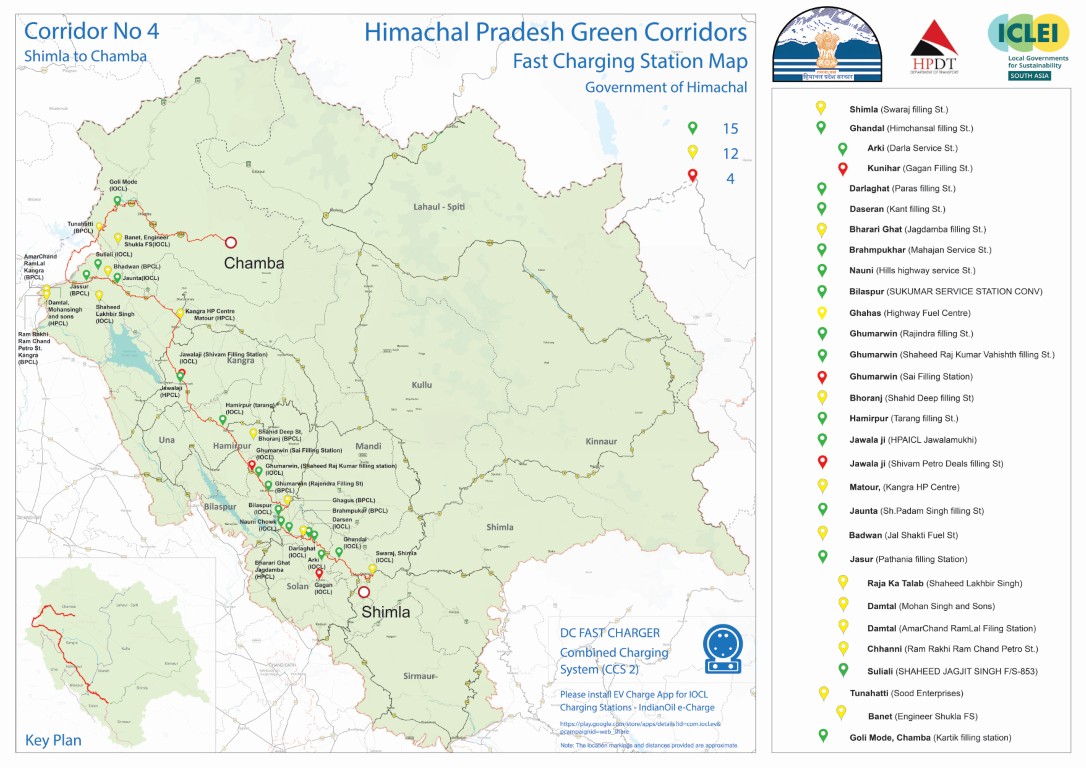
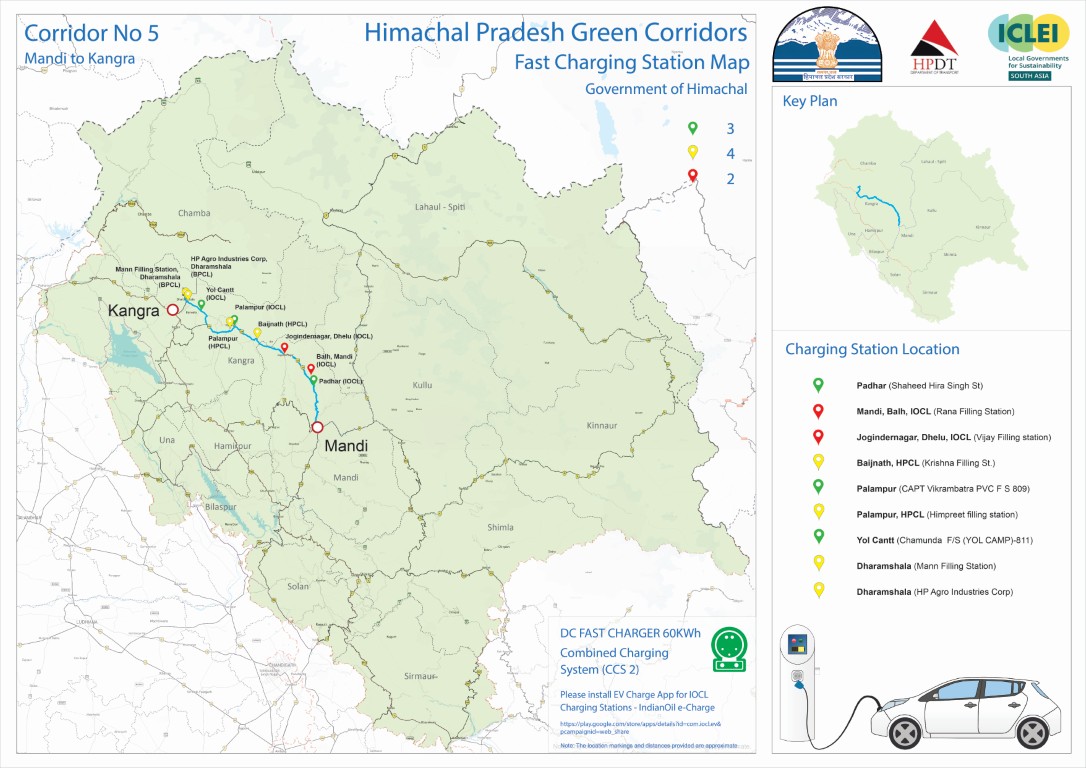
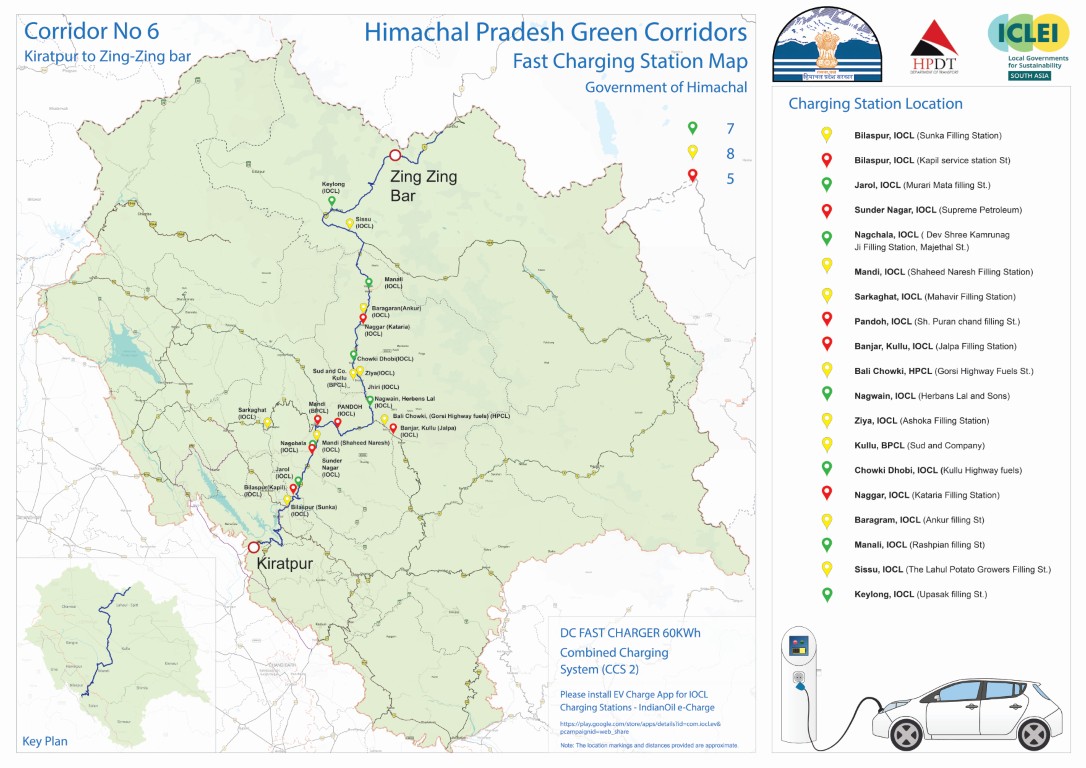
Green Corridor
LCV and Freight
Charging Infrastructure
Public Transport
Buildings Byelaws
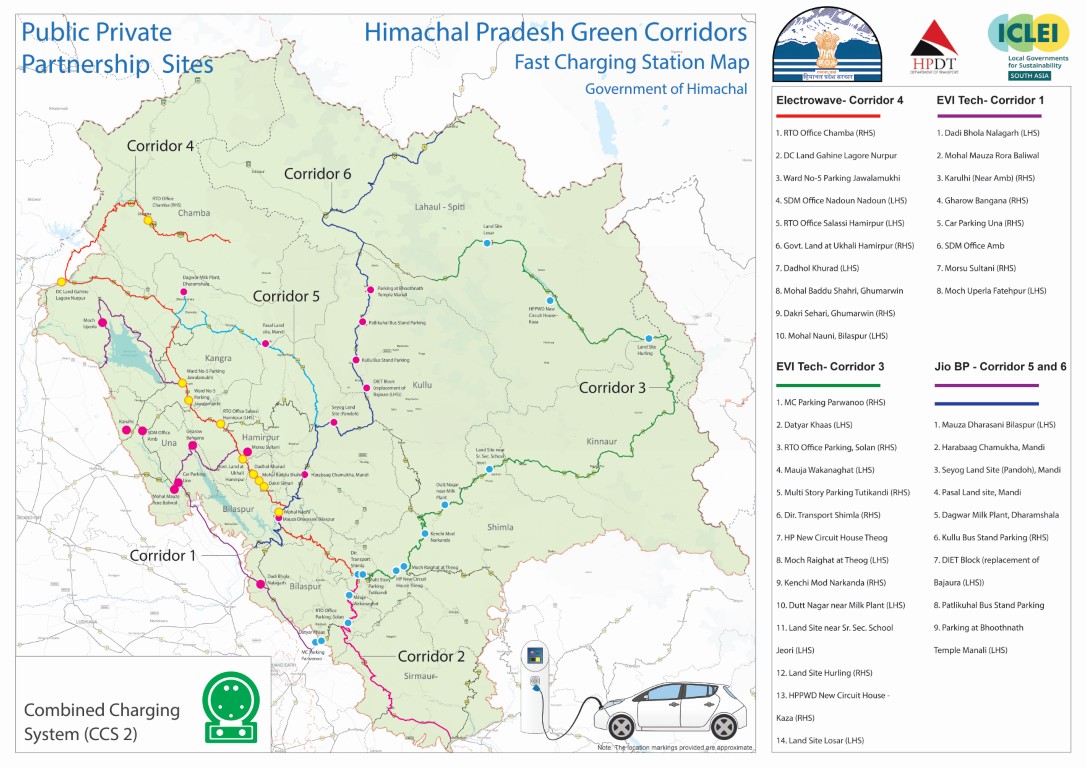
Green Corridor Routes
Parwanoo – Nalagarh – Una – Hamirpur– Dehra – Amb – Mubarakpur – Sansarpur Terrace – Nurpur
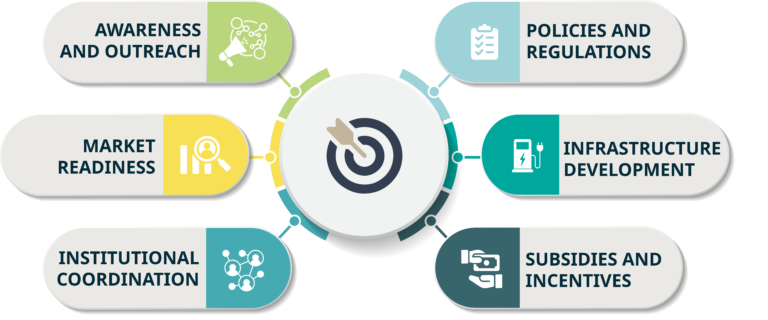
The EV Readiness Framework enables the government to clearly understand highlighting what is working well and identifying areas that need further attention in planning, technology, and skills development. The assessment pinpoints critical gaps in infrastructure, institutional capacity, and governance that could also otherwise slow down EV adoption.
The Government of Himachal Pradesh has launched an E-Taxi Scheme under the Rajiv Gandhi Swarozgar Startup Yojana. Under this scheme, the government will provide a subsidy of up to 50% on the purchase of e-taxis to support youth-led startups. The initiative aims to reduce vehicular pollution and help the state move towards becoming a Green State.
Key Highlights
Deployment of E-taxi – Govt department/ Local Authorities/ Autonomous Bodies/ Board/ Corporation
Time Period – 4 years, with a provision for a 2-year extension
Tariffs: Rates for engaging e-taxis will be based on the class of the vehicle
Facilitating agency: Himachal Pradesh Transport Department (online portal already active)
The State is expanding its public–private EV charging infrastructure through a diverse network of installations, ensuring widespread accessibility, reliability, and convenience for EV users. Charging infrastructure has been organised into five categories
Key Highlights
Charging stations at petrol pumps (79 DC Chargers)
Charging stations at government sites through PPP Mode (41 DC Chargers)
Charging stations at HPTDC hotels (10 Chargers in the first phase)
Charging stations at private hotels (50+ DC + AC Chargers)
Charging Stations at rest houses, circuit houses and government office premises (310 DC + AC Chargers)
Electrification of Solid Waste Management Fleet
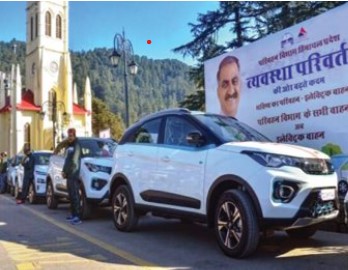
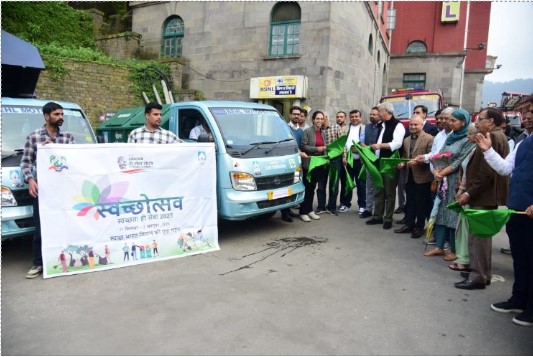
In a pioneering step toward climate-smart urban services, the Shimla Municipal Corporation (SMC) has introduced two electric solid waste collection vehicles, the first of their kind in Himachal Pradesh’s SWM fleet. The initiative has been implemented through Corporate Social Responsibility (CSR) funding from Satluj Jal Vidyut Nigam (SJVN) Limited, in collaboration with ICLEI South Asia. The vehicles were inaugurated on 19 September 2025 in Shimla in the presence of Hon’ble Harish Janartha, MLA, Shimla; Bhupendra Atri, Commissioner, SMC; Ajay Sharma, Director (Personnel), SJVN; and the CSR team.
Key Highlights
Innovative financing: First CSR-funded EVs for municipal solid waste management in Himachal Pradesh.
ICLEI South Asia provided technical and policy support to access CSR funds, and to design, and implement the pilot.
The project demonstrates how clean technologies can replace diesel fleets in hill cities.
Sustainable pathway: Supports gradual replacement of aging SWM vehicles with electric alternatives, reducing emissions, fuel costs, and noise pollution.
Demonstrates a replicable model for clean public transport across Himachal Pradesh through innovative financing, operational pilots, and policy support — enabling future expansion to other municipalities and transit services.
Operational pilot: Will generate data to inform fleet-wide electrification and replication across other Urban Local Bodies (ULBs).
Innovation in Municipal Finance: ICLEI South Asia leverages CSR funds to electrify Shimla’s SWM fleet
The State is expanding its public–private EV charging infrastructure through a diverse network of installations, ensuring widespread accessibility, reliability, and convenience for EV users. They have been divided into 5 categories.
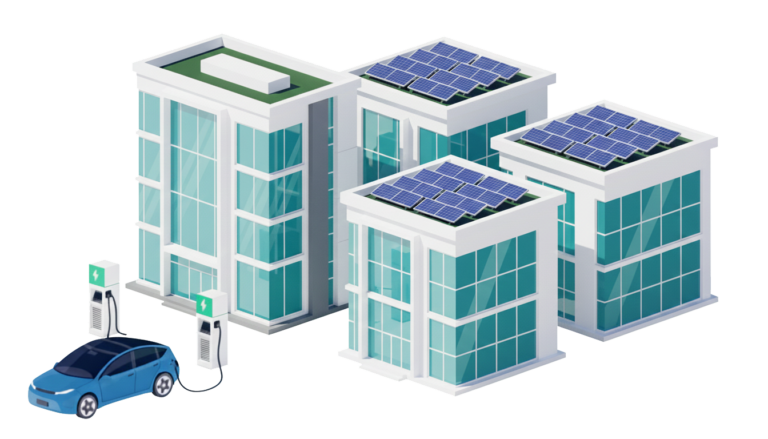
The Directorate of Transport, Shimla, has implemented a 15 kW Solar Battery Energy Storage System (BESS) integrated with EV charging infrastructure. The system is designed to supply reliable power to EV chargers by utilizing solar energy coupled with battery storage. This pilot project aims to demonstrate the feasibility of operating EV charging stations in remote and cold climatic regions of Himachal Pradesh, where grid availability and reliability are limited. Its successful implementation will support the expansion of sustainable and resilient EV charging infrastructure across challenging terrains and weather conditions.